

Freedom of Expression Between Ideals, Reality, and the Boundaries of Illusion

By Inas Marouf
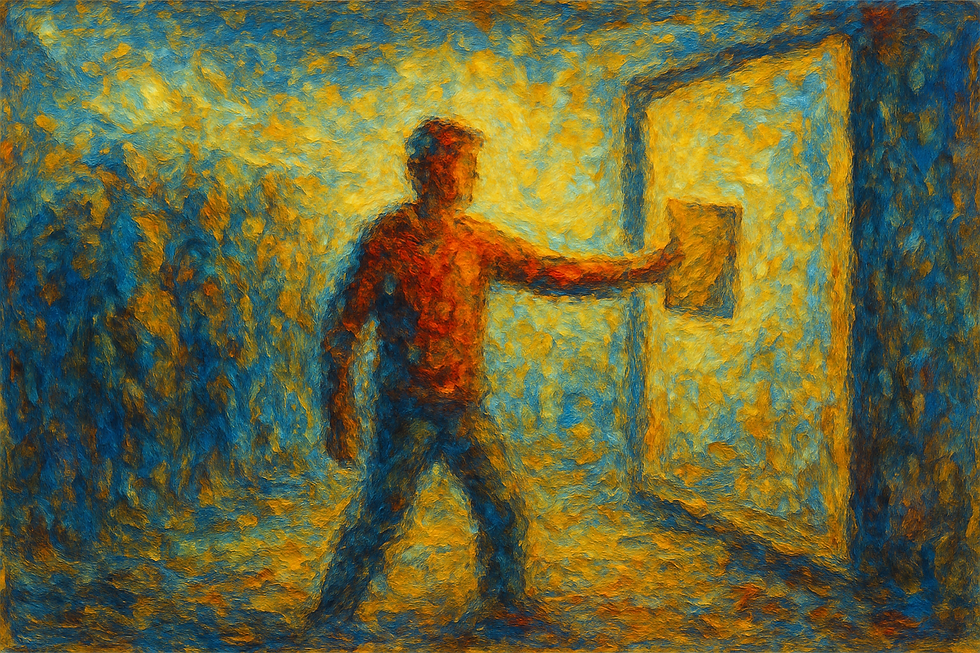
It is said that Picasso spent his life learning how to draw like children. What does that even mean? Perhaps he believed that a child is the first to hold pure freedom of expression, untouched by rules, fear, or judgment. As soon as a child begins to grasp the world, he draws lines no one understands, yet he understands them completely because they flow straight from his inner universe.
Then he grows, goes to school, learns language, builds sentences, and gradually loses the instinctive freedom he once relied on. Little by little, values, norms, and social expectations shape his voice, teaching him to please others before pleasing himself.
With time, the restraints accumulate, melting a person into the mold of society, until he adopts its rules as if they were an unchangeable fate. The belief spreads that dying with the group is safer, and that any idea outside the norm must remain buried at its birthplace. This old notion once stood as a major barrier to human progress.
Yet history resists stagnation. Between 1789 and 1799, the French Revolution erupted, marking the first major moment when people openly rejected oppression and demanded freedom. That moment launched a wave of European revolutions that lifted the curtain on the dark ages and opened the door to a new era built on liberty, justice, and equality. The individual became a being of inherent worth, with thoughts and opinions that deserved to be heard and respected.
In 1948, Article 19 of the Universal Declaration of Human Rights affirmed that freedom of expression is a fundamental right, granting every human being the ability to seek information, share ideas, and choose the medium of expression, whether written, printed, or artistic.
Implementing this right begins in the smallest circles, starting within the family. When a child is allowed to express himself honestly, he grows up emotionally and socially healthy. In schools, encouraging students to ask questions and think freely expands their horizons and moves them from the narrow to the boundless.
The same applies to universities, institutions, and workplaces. The individual is the foundation of civilization, and when we invest in his right to choose and express, society becomes stronger and more mature.
As these principles grew, a new slogan emerged in advanced societies, calling for even more freedom. Minorities demanded their rights. Women stepped into public life. Then newer, stranger forms of expression surfaced, such as people wanting to live as animals or adopting new gender identities, all under the banner of freedom of expression.
Then came another revolution. Over the past two decades, social media transformed into a completely open tool that transcended geographic, religious, and moral boundaries. Anyone could post anything at any time and find supporters or critics with no barriers.
Freedom of expression became a rushing stream, sometimes nourishing the ground, sometimes flooding the city.
But is this the freedom we want? And is access to publishing tools enough?
These questions became urgent for me after a series of incidents. I saw a European woman arrested simply for protesting against the genocide in Gaza. I saw my own account restricted because I used words like Gaza, martyr, prisoner, Palestine. I saw a Senegalese football player attacked harshly because he refused to support LGBTQ symbols out of respect for his beliefs.
What kind of freedom is this that we celebrate?
Where does it begin, and where does it end?
A woman is free to choose her hair color or dress length, but she is not free to protest peacefully against bombings. A man is free to change his gender identity, but not free to criticize occupation. A journalist may praise a football player, but cannot condemn the killing of civilians in the West Bank.
An artist is free to support LGBTQ rights but becomes dangerous if he supports the right of return. A person is free to burn the Quran, yet becomes extreme if he burns the Israeli flag. Opposing war in Ukraine is heroic, but opposing displacement in Palestine, Sudan, or Afghanistan is often buried under global silence.
These contradictions reveal that the version of freedom of expression exported to the world is not as absolute as advertised. There is a hidden hand controlling the standards, raising or lowering the ceiling of freedom whenever it wishes.
It is time for a serious question: How can we be truly free? Not only in expression, but in owning our unmanipulated thoughts and liberating our minds from the implanted notions that distance us from truth.
The freedom we seek is not a slogan. It is responsibility, action, awareness, and a genuine voice that is not molded by what others permit.
Inas Marouf, a Palestinian from Gaza, student of Arabic language and education.


Comments